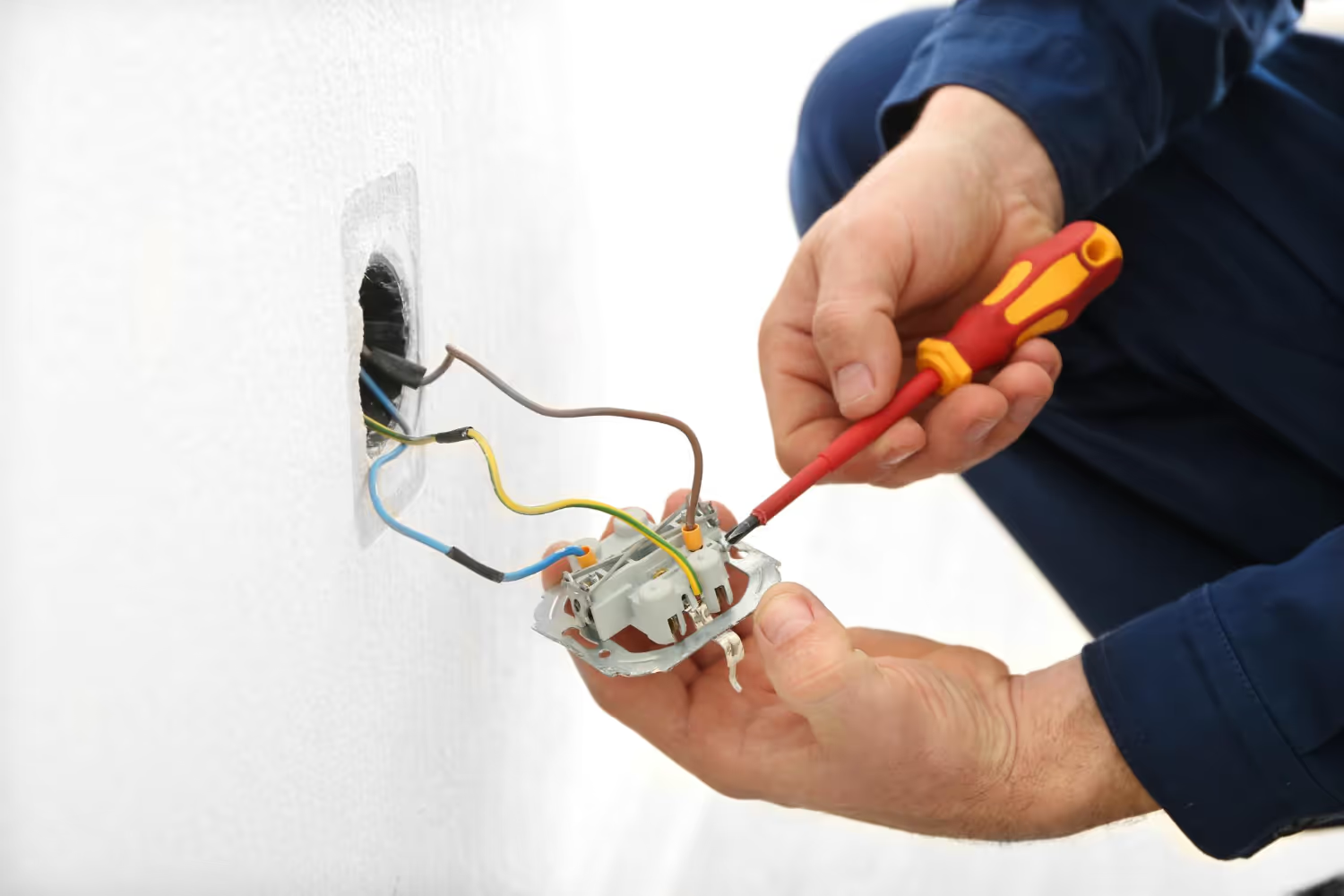
Good lighting can transform any home from ordinary to extraordinary. Professional HOME lighting installation ensures safe electrical work while creating the perfect atmosphere for every room. Many homeowners struggle with dim spaces, outdated fixtures, or switches that don't work properly.
The right lighting setup involves more than just screwing in a new fixture. Professional electricians handle complex wiring, ensure safety codes are met, and help homeowners choose the best options for their needs.
This includes everything from energy-efficient LED upgrades to smart lighting systems that can be controlled from a phone. Planning a lighting project requires understanding different fixture types, modern technology options, and proper installation techniques.
In this article, you’ll learn how to plan and execute a safe, stylish, and energy-efficient home lighting installation.
Let’s break down the key points you should consider:
- Why professional lighting installation matters
- Popular types of home lighting installations
- Benefits of upgrading to LED and smart lighting
- How Sunshine Services installs lighting the right way
- Tips for planning your lighting design
Keep reading! Te following content covers why professional installation matters, popular lighting choices, and how to design a lighting plan that enhances both function and style throughout the home.
Why professional lighting installation matters
Proper lighting installation requires technical expertise, electrical knowledge, and safety compliance that only trained professionals can provide. Licensed electricians deliver lasting results that protect your home and maximize your lighting investment.
How expert installation ensures safety and efficiency
Professional electricians understand electrical codes and safety requirements that protect homes from fire hazards and electrical problems. They know how to properly wire fixtures, install switches, and connect circuits without creating dangerous conditions.
Licensed installers use the right tools and techniques for each job. They secure fixtures properly so they won't fall or become loose over time. Proper installation prevents flickering lights, electrical shorts, and power failures.
Expert installation also maximizes energy efficiency. Professionals position lights in optimal locations and recommend the best bulb types for each space. They install dimmer switches and smart controls correctly so they work as intended.
Professional work comes with warranties and guarantees. If problems occur after installation, licensed electricians return to fix issues at no extra cost. This protection saves money on future repairs.
The difference between DIY and licensed electrical work
DIY lighting projects often result in safety hazards, code violations, and expensive repairs. Homeowners without electrical training may create dangerous wiring connections or install fixtures incorrectly.
Licensed electricians complete years of training and pass certification exams. They stay current on electrical codes and safety standards. DIY installers lack this knowledge and may not recognize potential problems.
Professional electricians carry insurance that protects homeowners from liability. If accidents happen during installation, their insurance covers damages. DIY work offers no such protection.
Licensed work passes home inspections and meets building codes. DIY electrical work may fail inspections and require costly corrections before home sales can proceed.
Why quality lighting transforms your home's look and feel
Professional installation creates lighting schemes that enhance room function and appearance. Electricians understand how to layer different light types for optimal results in each space.
Proper fixture placement eliminates dark corners and shadows while providing adequate light for daily activities. Professionals position lights to highlight architectural features and create visual interest.
Quality installation supports modern lighting technology like smart switches, automated controls, and energy-efficient LED systems. These features improve convenience while reducing electricity costs.
Well-installed lighting increases home value and appeal to potential buyers. Professional work ensures fixtures operate reliably for many years without maintenance problems or safety concerns.
Popular types of home lighting installations
Modern homes use three main lighting approaches that work together to create functional and beautiful spaces. Recessed lighting setup provides clean lines and even light distribution, while pendant and accent fixtures add visual interest and focused illumination for specific tasks.
Recessed lighting for a clean, modern aesthetic
Recessed lights sit flush with the ceiling to create a streamlined look. They work well in kitchens, bathrooms, and living rooms where homeowners want bright light without visible fixtures.
Indoor lighting installation for recessed lights requires cutting holes in the ceiling. An electrician runs wiring between the ceiling joists to connect each light. Most installations use 4-inch or 6-inch diameter fixtures.
These lights provide even illumination across large areas. They eliminate shadows that hanging fixtures might create. Recessed lighting setup works especially well in rooms with low ceilings.
Homeowners can choose different beam angles for various purposes:
- Narrow beam (15-30 degrees): Highlights artwork or specific areas
- Medium beam (40-60 degrees): General room lighting
- Wide beam (80+ degrees): Broad area coverage
LED recessed lights use less energy than traditional bulbs. They also produce less heat and last much longer. Dimmer switches allow users to adjust brightness levels throughout the day.
Pendant and accent lights that add personality to your space
Pendant lights hang from the ceiling on cords, chains, or rods. They create focal points while providing targeted light for work areas and dining spaces.
Kitchen islands commonly use multiple pendant lights spaced evenly apart. The standard height places the bottom of each fixture 30-36 inches above the counter surface.
Accent lighting highlights specific features like artwork, plants, or architectural details. Track lighting systems allow homeowners to position multiple spotlights along a single electrical connection.
Common pendant and accent options include:
- Mini pendants: Small fixtures perfect for groups of three or more
- Drum pendants: Wide shade styles that distribute light evenly
- Track lights: Adjustable spotlights on ceiling-mounted rails
- Wall sconces: Mounted fixtures that provide ambient lighting
These fixtures come in countless styles and materials. Glass, metal, and fabric shades each create different lighting effects. The fixture style should match the room's overall design theme.
Outdoor and landscape lighting that boosts curb appeal
Outdoor lighting improves safety while showcasing a home's exterior features. Well-planned installations light pathways, highlight landscaping, and create welcoming entry areas.
Path lights guide visitors along walkways and driveways. Solar-powered options eliminate the need for electrical wiring. They charge during the day and automatically turn on at dusk.
Landscape lighting uses various fixture types for different purposes:
Fixture Type
Best Use
Installation Method
Spotlights
Trees, architectural features
Ground stakes or wall mounts
Well lights
Uplighting trees, flagpoles
Buried in ground
Step lights
Stairs, retaining walls
Built into structures
String lights
Patios, pergolas
Hung between posts
Low-voltage systems use transformers to reduce standard household current to 12 volts. This makes installation safer and reduces energy costs.
Motion sensors add security benefits to outdoor installations. They activate lights when people approach the house. Timer controls ensure lights operate only during desired hours.
Weather-resistant fixtures must withstand rain, snow, and temperature changes. Look for IP65 or higher ratings for outdoor installations.
Benefits of upgrading to LED and smart lighting
The DOE states that residential LED lighting products use at least 75% less energy and last up to 25 times longer than traditional incandescent lighting
Modern LED and smart lighting systems deliver significant cost savings through reduced energy consumption while offering homeowners unprecedented control over their lighting environment. These technologies combine financial benefits with enhanced convenience and environmental responsibility.
How LED fixtures lower energy bills and last longer
According to the U.S. Department of Energy (DOE), lighting accounts for about 15% of an average home’s electricity use.
LED bulbs use up to 80% less energy than traditional incandescent bulbs. A typical LED bulb consumes only 8-12 watts compared to 60 watts for an incandescent bulb that produces the same brightness.
The average household saves $75 per year on electricity bills after switching to LED lighting. Over a 10-year period, this creates savings of $750 or more depending on local energy rates and usage patterns.
LED lifespan advantages:
- LED bulbs last 15,000-50,000 hours
- Incandescent bulbs last only 1,000-2,000 hours
- CFL bulbs last 8,000-10,000 hours
This extended lifespan means homeowners replace LED bulbs far less frequently. A single LED bulb can last 10-25 years with normal use, reducing maintenance costs and the hassle of frequent replacements.
LEDs also produce less heat than traditional bulbs. This reduces cooling costs during summer months since air conditioning systems work less to maintain comfortable temperatures.
The convenience of smart lighting controls and automation
Smart LED bulbs connect to home Wi-Fi networks and allow control through smartphone apps or voice commands. Homeowners can adjust brightness, change colors, and set schedules from anywhere in the house or while away from home.
Key smart lighting features:
- Dimming control - Adjust brightness levels instantly
- Color changing - Switch between warm and cool white or millions of colors
- Scheduling - Lights turn on/off automatically at preset times
- Motion sensors - Lights activate when someone enters a room
Smart lighting systems integrate with popular platforms like Amazon Alexa, Google Assistant, and Apple HomeKit. Voice commands like "dim the living room lights to 50%" provide hands-free control.
Geofencing technology automatically adjusts lighting based on whether residents are home or away. This feature enhances security by maintaining the appearance of occupancy and prevents energy waste from lights left on accidentally.
Smart bulbs also provide energy monitoring data, showing exactly how much electricity lighting consumes and helping homeowners optimize their usage patterns.
Combining style and sustainability for modern homes
LED lighting upgrade options include various fixture styles that complement contemporary home designs. Recessed LED panels create clean, minimalist aesthetics while track lighting highlights artwork and architectural features.
Popular LED design options:
- Under-cabinet strips for kitchen task lighting
- Pendant lights with adjustable color temperature
- Recessed downlights with narrow or wide beam angles
- Decorative Edison-style LED filament bulbs
Smart home lighting systems offer customizable lighting scenes for different activities. Reading mode provides bright, focused light while movie mode creates dim, warm ambiance automatically.
LED technology supports environmental sustainability goals by reducing energy consumption and carbon footprint. LEDs contain no mercury or other hazardous materials found in CFL bulbs, making disposal safer and easier.
The reduced energy demand from widespread LED adoption decreases strain on electrical grids and reduces greenhouse gas emissions from power plants. A single LED bulb prevents approximately 1,400 pounds of carbon dioxide emissions over its lifetime compared to incandescent alternatives.
LED fixtures also reduce light pollution since they direct light more precisely where needed rather than scattering it in all directions like older bulb technologies.
How Sunshine Services installs lighting the right way
Sunshine Services follows a proven process that takes homeowners from initial design concepts to fully functioning lighting systems. Their certified electricians use quality materials and safety protocols to deliver reliable installations that last for years.
Step-by-step process from design to final installation
Sunshine Services starts every lighting project with a free consultation and virtual design service. They create detailed plans that show homeowners exactly how their new lighting will look before any work begins.
The design phase includes measuring spaces and checking electrical capacity. Their electricians assess existing wiring to determine what upgrades might be needed. This prevents surprises during installation.
Installation begins with turning off power at the circuit breaker for safety. The team removes old fixtures carefully and checks wire connections. They install new mounting hardware that matches each fixture's weight and size requirements.
Key installation steps:
- Power shutdown and safety checks
- Old fixture removal and wire inspection
- New mounting bracket installation
- Electrical connections with proper wire nuts
- Fixture mounting and bulb installation
- Power restoration and testing
Each connection gets tested before the power comes back on. The electricians verify that all switches work correctly and that fixtures provide the expected light output.
Using top-quality fixtures for long-term performance
Sunshine Services works with fixtures designed to last many years without frequent repairs or replacements. They install both customer-purchased fixtures and recommend high-quality options from trusted manufacturers.
Their fixture selection includes uplight, downlight, spotlight, pathlight, string lights, well lights, floodlights, and deck lighting. Each type serves specific purposes and gets matched to the right locations.
For outdoor installations, they use weather-resistant fixtures with proper seals. These prevent water damage that causes early failures. Indoor fixtures get selected based on room humidity and usage patterns.
The company also installs modern LED systems that use less energy than traditional bulbs. LED fixtures last longer and provide consistent light output over their lifetime.
As per the U.S. Environmental Protection Agency’s ENERGY STAR programme, certified lighting fixtures can use around 70–90% less energy than standard incandescent versions.
All fixtures come with manufacturer warranties. Sunshine Services helps homeowners understand coverage terms and handles warranty claims when needed.
Why local homeowners trust Sunshine's certified electricians
Sunshine Services employs licensed and insured electricians who follow local electrical codes. Their certifications stay current through ongoing training and testing requirements.
Each electrician has experience with residential wiring systems and lighting installations. They know how to work safely around live electrical circuits and identify potential hazards before they cause problems.
The company carries full insurance coverage that protects homeowners during installation work. This coverage includes both property damage and worker injury protection.
Professional electrician services include:
- Code compliance verification
- Safety inspections during installation
- Proper grounding techniques
- Load calculation for circuit capacity
- Troubleshooting electrical issues
Local homeowners choose Sunshine Services because they complete projects on schedule and within budget. Their electricians clean up work areas and test all installations before leaving the job site.
The company provides service guarantees on their installation work. They return to fix any issues that arise from their workmanship at no additional charge.
Tips for planning your lighting design
Good lighting design balances practical needs with the right mood for each space. The brightness and warmth of lights must match how people use each room, while smart placement makes daily tasks easier and more comfortable.
Balancing function and ambiance in every room
Each room needs different types of lighting to work well. Kitchens need bright task lighting over counters for cooking and prep work. Living rooms need softer ambient lighting for relaxation and conversation.
Layer your lighting with three main types:
- Ambient lighting - general room lighting from ceiling fixtures
- Task lighting - focused light for specific activities
- Accent lighting - decorative lights that highlight artwork or features
Bedrooms work best with dimmable overhead lights plus reading lamps by the bed. Bathrooms need bright, even lighting around mirrors for grooming tasks.
Home offices require bright desk lighting to reduce eye strain. Position task lights to avoid shadows on work surfaces.
Dining rooms benefit from a chandelier or pendant light over the table. Add wall sconces or table lamps for softer ambient lighting during meals.
Choosing the right brightness and color temperature
Light brightness is measured in lumens, not watts. Higher lumens mean brighter light. Most living spaces need 20-30 lumens per square foot for general lighting.
Color temperature affects mood and function:
Color Temperature
Best For
Effect
2700K-3000K (Warm white)
Living rooms, bedrooms
Cozy, relaxing
3000K-4000K (Neutral white)
Kitchens, bathrooms
Natural, balanced
4000K-6500K (Cool white)
Home offices, garages
Alert, energizing
Warmer lights work better in evening hours. They help the body prepare for sleep. Cooler lights keep people alert during daytime work.
Kitchens often use 3000K lights for a clean but welcoming feel. Bedrooms typically use 2700K for a calm atmosphere.
How lighting placement enhances comfort and efficiency
Light placement directly affects how comfortable and useful a space feels. Poor placement creates shadows, glare, and dark spots that make tasks harder.
Key placement rules:
- Place task lights to the side of work areas, not directly overhead
- Keep light sources at eye level or slightly above when possible
- Avoid placing lights where they create glare on screens or mirrors
In kitchens, install under-cabinet lights to eliminate shadows on countertops. Position pendant lights 30-36 inches above kitchen islands.
For reading areas, place floor or table lamps beside chairs rather than behind them. This prevents shadows from falling on books or devices.
Bathroom vanity lights should be mounted on both sides of mirrors when possible. This creates even lighting across the face without harsh shadows.
Ceiling lights in bedrooms work best when centered over the room, not over the bed. This provides better general lighting without creating glare for people lying down.
Conclusion
Home lighting installation transforms any living space into something both beautiful and functional. Proper planning makes the difference between amateur results and professional-looking outcomes.
The right fixtures enhance daily activities while creating the perfect mood. Energy-efficient options save money on electricity bills for years to come.
Safety should always be the top priority during any electrical work. Homeowners must know when to call professionals instead of attempting complex installations alone.
DIY enthusiasts can handle simple fixture replacements with basic tools and knowledge. More complex projects involving new wiring require licensed electricians.
The investment in quality lighting pays off through improved home value and daily comfort. Each room benefits from thoughtful fixture placement and proper lighting levels.
Modern lighting technology offers countless options for customization. Smart controls and LED bulbs provide convenience while reducing energy costs.
Taking time to research and plan prevents costly mistakes later. The right approach creates lighting that works perfectly for each family's needs and preferences.
Schedule your home lighting installation with Sunshine Services to ensure safe, code-compliant, and beautifully lit spaces.




.svg)